
Sarah watches her 9-year-old son Jake bounce from his math worksheet to the window, then to his fidget cube, and back to the paper—completing just two problems in 20 minutes. Meanwhile, he can spend three hours building an intricate LEGO creation or reciting every dinosaur fact he’s ever learned. Sound familiar?
If you’re homeschooling a neurodiverse learner—whether they have ADHD, autism, dyslexia, or other learning differences—you’ve likely discovered that traditional educational approaches often miss the mark. The good news? Homeschooling’s natural flexibility makes it the perfect environment to create a truly personalized learning experience that works with your child’s brain, not against it.
Why Neurodiverse Brains Need Different Approaches
Neurodiverse children aren’t broken versions of neurotypical kids—they’re wired differently, with unique strengths and challenges that require thoughtful adaptation. When we personalize learning for these brilliant minds, remarkable things happen.
Strengths become superpowers. That child who struggles with traditional reading but can explain complex engineering concepts? When we build learning around their interests and abilities, their natural curiosity drives incredible growth. A fascination with trains can become a gateway to math, history, geography, and physics.
Challenges become manageable. Instead of fighting against executive function difficulties or sensory sensitivities, personalized learning works around them. Short, focused learning bursts replace lengthy study sessions. Movement breaks become part of the curriculum, not interruptions to it.
Independence flourishes. When children have choices about how, when, and where they learn, they develop self-advocacy skills that will serve them throughout life. They begin to understand their own learning needs and communicate them effectively.
The magic happens when we stop trying to fit square pegs into round holes and instead celebrate the unique shape each child brings to their learning journey.
The Foundation: Understanding Your Unique Learner
Before diving into curriculum choices or daily schedules, successful neurodiverse homeschooling starts with truly knowing your child. This isn’t about formal testing or complicated assessments—it’s about becoming a detective of your child’s learning patterns.
Map their cognitive landscape. Spend time observing when your child is most focused, what captures their attention, and how they prefer to receive information. Does your daughter remember everything she hears but struggle with written instructions? Does your son need to move while thinking, or does movement actually distract him?
Discover their sensory world. Many neurodiverse children have strong sensory preferences that dramatically impact learning. Some need complete quiet to concentrate, while others focus better with background music. Some learn best sitting on the floor, others need the structure of a desk. There’s no right or wrong—only what works for your specific child.
Identify the sweet spot. Every neurodiverse learner has an optimal attention span that varies by subject and time of day. For some, it’s 10 minutes of math before they need a break. For others, they can hyperfocus on a science project for hours. Finding these patterns helps you structure learning for success rather than frustration.
Core Strategies That Transform Learning
Embrace the Power of Multiple Pathways
Traditional education often presents information in limited ways—read the textbook, write the report, take the test. Neurodiverse learners thrive when they can access the same information through different channels and demonstrate their understanding in varied formats.
Visual learners might benefit from infographics, color-coded notes, mind maps, and diagram-heavy resources. Consider turning historical timelines into comic strips or representing math concepts through drawings and charts.
Auditory processors often excel with read-alouds, educational podcasts, discussion-based learning, and mnemonic songs. Let them talk through their thinking process or record their responses instead of always writing them down.
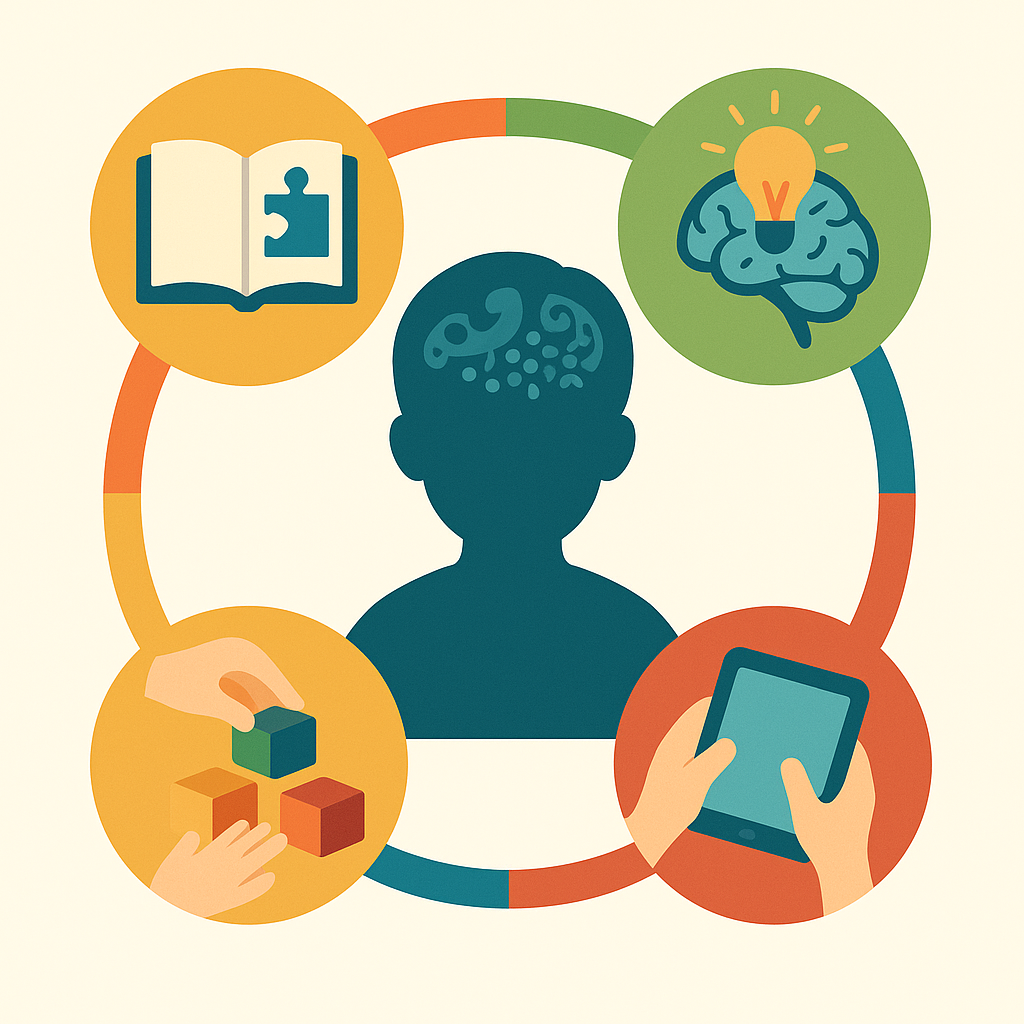
Kinesthetic learners need hands-on experiments, building projects, and opportunities to move while learning. Math manipulatives, science labs, and educational games can transform abstract concepts into concrete understanding.
Tactile learners benefit from textured materials, art integration, and opportunities to create physical representations of their learning. Clay models of cells, textured letter cards for spelling, or fabric samples for geography lessons can make abstract concepts tangible.
Design Learning in Digestible Chunks
The traditional hour-long subject blocks that work for some neurotypical learners can be overwhelming for neurodiverse children. Instead, break learning into “micro-lessons” that match your child’s attention span and energy levels.
For a child with a 15-minute focus window, this might mean five minutes of direct instruction, five minutes of hands-on practice, and five minutes of discussion or reflection. Use visual or auditory timers to signal transitions, helping children anticipate and prepare for changes.
Consider themed days that reduce the cognitive load of constant subject switching. “Math Monday” or “Science Friday” can help children dive deeper into topics without the fatigue that comes from jumping between different types of thinking throughout the day.
Prioritize Choice and Agency
Nothing transforms a reluctant learner like genuine choice in their education. This doesn’t mean complete free-for-all learning, but rather structured options that honor their preferences while meeting educational goals.
Offer choices in how they engage with material—reading a book, watching a documentary, or conducting an interview to learn about a historical period. Provide options for how they demonstrate understanding—through a traditional report, a creative presentation, a hands-on project, or a recorded explanation.
Even small choices matter. Let them pick which subject to tackle first each day, choose their learning location, or select from a few different ways to practice a skill.
Building Your Personalized Homeschool Framework
Step 1: Create Your Child’s Learning Profile
Start with a simple discovery process that reveals your child’s unique patterns and preferences. This isn’t about formal assessment—it’s about systematic observation and conversation.
Interest inventory: What topics make their eyes light up? What do they choose to do in their free time? These interests become powerful vehicles for learning across all subjects.
Learning preferences assessment: Through observation and gentle experimentation, note whether they learn better through listening, seeing, doing, or touching. Most children benefit from combinations, but usually have a preferred starting point.
Energy and attention mapping: Track when they’re most alert, how long they can focus on different types of tasks, and what helps them re-center when overwhelmed. This becomes the foundation for your daily rhythm.
Step 2: Design Flexible Learning Structures
With your child’s profile in hand, create frameworks that provide structure while maintaining adaptability. Think of these as scaffolds that can be adjusted as your child grows and changes.
Create learning blocks that match attention spans. If your child focuses best for 20 minutes, design learning sessions around that natural rhythm. Include clear beginnings and endings, with built-in breaks that aren’t punishments but necessary parts of the learning process.
Build in movement and sensory regulation. Rather than viewing fidgeting or movement needs as problems to solve, integrate them into learning. Jumping jacks between math problems, stress balls during read-alouds, or walking meetings for verbal processing can enhance rather than distract from learning.
Develop choice frameworks. Create structured options that provide autonomy without overwhelming decision-making. A simple choice board with three project options, two different ways to practice a skill, or flexibility in the order of daily subjects can transform reluctance into engagement.
Step 3: Curate Resources That Match Learning Styles
The resources you choose can make or break your homeschool experience. Look for materials that offer multiple entry points and ways to engage with content.
Digital tools for accessibility: Text-to-speech programs for children who struggle with reading, adaptive math programs that adjust to their pace, or visual organizers that help with planning and organization.
Hands-on materials for concrete learning: Manipulatives that make abstract concepts touchable, art supplies for creative expression, or building materials for engineering projects.
Multi-sensory resources: Programs that combine visual, auditory, and kinesthetic elements, or materials that allow children to see, hear, and do simultaneously.
Step 4: Implement Ongoing Assessment and Adjustment
Personalized learning isn’t a “set it and forget it” approach. It requires regular check-ins, honest evaluation, and willingness to pivot when something isn’t working.
Daily reflection habits: Simple “roses and thorns” conversations about what went well and what was challenging. This helps both you and your child become aware of patterns and preferences.
Weekly planning sessions: Collaborative meetings where you and your child review the previous week and adjust the upcoming one. What resources should you continue using? What needs to be modified? What new interests have emerged?
Quarterly goal review: Longer-term evaluation of academic progress and life skills development. Celebrate growth, identify areas for focus, and set realistic goals for the months ahead.
Practical Strategies That Make a Difference
Visual schedules and routines: Create daily schedules with pictures or symbols that help children understand expectations and transitions. This reduces anxiety and increases independence.
Interest-based project learning: If your child loves dinosaurs, use that passion to explore paleontology (science), prehistoric time periods (history), measurement and comparison (math), and descriptive writing (language arts).
Sensory break stations: Designate areas of your learning space with different sensory tools—stress balls, textured fabrics, noise-canceling headphones, or movement aids that children can access as needed.
Collaboration opportunities: Connect with other homeschool families for group projects, science labs, or social learning experiences that provide peer interaction while maintaining the personalized approach your child needs.
Celebration systems: Develop ways to acknowledge effort and growth that match your child’s preferences—some love public recognition, others prefer private acknowledgment, and some are motivated by tangible rewards or special activities.
Embracing the Journey
Creating a personalized learning environment for your neurodiverse child isn’t about perfection—it’s about progress, patience, and celebrating the unique way their mind works. Some days will flow beautifully, with engaged learning and visible growth. Other days might involve more troubleshooting than teaching, and that’s completely normal.
Remember that your willingness to adapt, experiment, and honor your child’s individual needs is providing them with something invaluable: the understanding that their way of thinking and learning has value. You’re not just teaching academic subjects—you’re helping them develop self-awareness, self-advocacy skills, and confidence in their abilities.
The goal isn’t to make your neurodiverse child learn like everyone else. It’s to help them learn like themselves—fully, joyfully, and successfully. When you create space for their neurodiversity to be a strength rather than a challenge to overcome, you unlock learning potential that might never emerge in traditional settings.
Trust the process, trust your child, and trust yourself. The flexibility to truly personalize learning is one of homeschooling’s greatest gifts—especially for the wonderfully diverse minds that see and process the world in their own brilliant ways.
